I learned more about them during the pandemic and saw evidence in our neighborhood while on early morning walks. One house in particular often had children’s educational toys and games lined up on its corner wall. My first thought was that this family had set the items out hoping a passerby would claim them, much like furniture we’ve seen on curbs with “Free” signs attached. Perhaps this was the case. But maybe they were part of a local giveaway program. One being the “Free Finds” section of our neighborhood Nextdoor app. It’s a common place to list household products that can be recycled, rehomed, and reused. Or maybe the items were being offered through our Southwest CA chapter of the “Buy Nothing Project” that can be accessed through Facebook with 2.9K members in our area alone! Not as familiar with this program, I did a little digging.
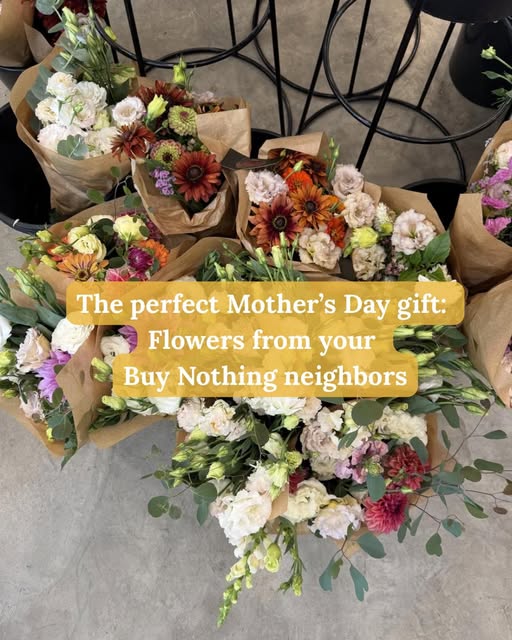
Founded in 2013 by Rebecca Rockefeller and Liesl Clark in Bainbridge, Washington, the aim of the Buy Nothing Project is a basic one. That is, “to build resilient communities where our true wealth is the connections forged between neighbors”. And its mission is carried out through setting up a gift economy. This system in which goods and services are offered without a monetary exchange, does more than put items in other people’s hands. It fosters relationships in which individuals take turns being the giver and receiver. The Buy Nothing Project encourages people to give away items they no longer need and to circulate these valuables among small groups. That way, traveling to pick up goods is minimized, saving time and money, and reducing waste.
Gift economies are nothing new as they have been documented in several ancient societies. In Papua New Guinea, the system of gifting was known as the Kula exchange. Islanders would travel throughout the Kula ring comprised of 18 island communities and would offer red shell necklaces and white shell bracelets to others in hopes of strengthening social relationships. Indigenous peoples of the Pacific Northwest have long participated in what are known as potlatches. During these elaborate feasts, leaders give away accumulated possessions to community members to solidify bonds and gain social status. And in New Zealand, the Māori Koha is a common donation, gift, or offering people give to honor hosts, and to support gatherings and events that bring their communities together.
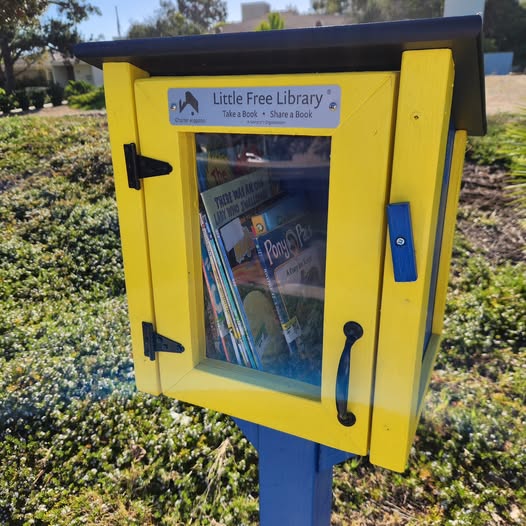
Since becoming aware of gift economies, I have noticed even more modern-day examples in our town. At last count, there are 11 Little Free Libraries nearby. This makes me so happy! Not only because I know the value of reading, but sharing books has the ability to open minds, hearts, and doors. Another way neighbors here are contributing to these systems is through food donations. Every Friday and Saturday morning when we walk by a local church, volunteers are busy filling the trunks of cars lined up in their parking lot with excess canned goods, beverages, and produce from local markets. While it saddens me that so many people are in need, it also makes me glad that food that would be tossed out is handed out instead. And those who show up are able to be nourished by what they receive.
From my journal: March 31, 2026, Newbury Park, California
“…walked down Felton today…a Local Farm Share stand about 3 ft tall has been built and placed between the sidewalk and street…very cool… had a few lemons in the baskets! Great idea!”
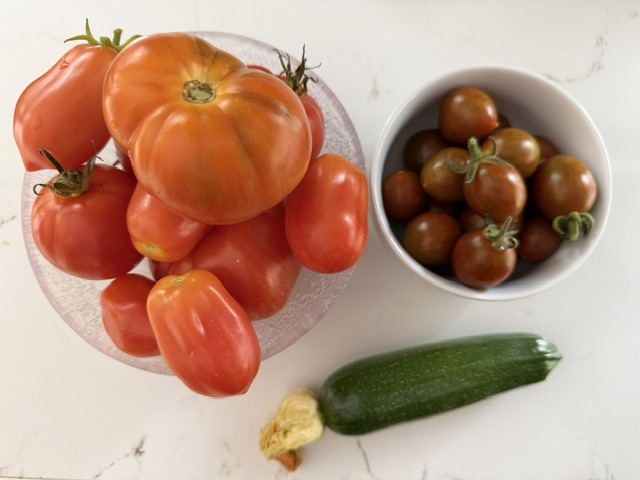
In addition to this lovely farm stand, I’ve also been noticing more folks putting out containers of home-grown produce for others to take home and enjoy. Over the years, we’ve have been fortunate to be recipients of such goodness. Fresh lemons, apples, and oranges have been handed to us by our cul-de-sac neighbors. We’ve appreciated not only the delicious fruit, but the kind spirit in which they were given. Right here in our own backyard, we are growing zukes, cukes, carrots, beets, and tomatoes. While all of the vegetables are growing, the tomatoes are really thriving. This made it possible for me to do a little gifting myself last week. I picked a dozen of our ripest “chocolate sprinkle” tomatoes and gave them to a friend when we met up for coffee. She and her husband were so pleased and sent us a note of gratitude. A feel-good exchange for all of us.
Local gifting can spread goods as well as goodwill. It allows givers to offer their wares, and the receivers to offer their thanks. And vice versa when the abundance flows in the other direction. This simple act beautifully illustrates the goal of a gift economy, to build communities by sharing and delighting in items exchanged, and maybe even better, the valuable connections made between neighbors.

