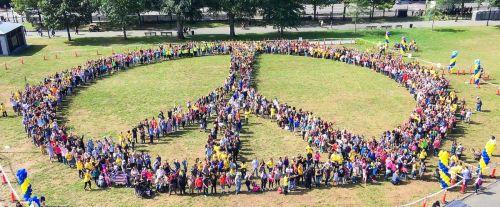
We need more people like him, especially now. The person who was a champion for peace. The person who believed in making changes through non-violence. The person who practiced what he preached. Today we celebrate Martin Luther King Jr. Day in the United States like we have for the last 40 years. This federal holiday honors King’s non-violent activism and his participation in protests against racism, war, and poverty. Being awarded the Nobel Peace Prize in 1964, his life’s work and his powerful speeches are still well known and are still revered today.
From my journal: January 16, 2017, Newbury Park, California
“…hope everyone remembers the peaceful nature of MLK Jr. today…now that the election is over, I’d think the political divisiveness and craziness would die down but it seems to be ramping up…”
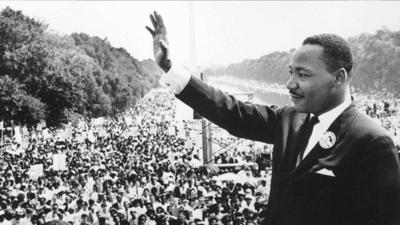
How is it that the issues I referred to in my journal nine years ago, as well as what MLK Jr. was rallying against during the Civil Rights Movement of the 1950s and 1960s, are still with us today? And while peaceful protesting has increased, so has political violence. Although the U.S. has a long history of political brutality, during King’s time destructive acts were usually perpetrated on structures and property in the name of animal rights, social injustices, and environmental causes. Today’s political violence is different. It is now more widespread, more organized and planned, and more deadly. While some protest causes may be the same, the targets of violence have shifted to people. Why? What is it about the times we are living in that contribute to this uptick?
Studies suggest social media, access to guns, mental health factors, and attitudes about achieving political goals all play a part. Because people are allowed to be anonymous on social media, they can express themselves with no accountability or fear of consequences. With all the apps and platforms available to communicate, conspiracy theories and extremist views spread fast and can reach massive audiences. According to the Giffords Law Center, as political violence has risen so has access to guns. In addition, firearms have become the “weapon of choice” for violent extremists. The underfunding of mental health programs has left many needing help, without it. And the desensitization to violence and the normalization of what some high-profile politicians and elected officials say and do, all contribute to where we are today. As Bruce Hoffman, a terrorist specialist at Georgetown University points out, “people are now quick to excuse actions and speech that were once taboo.”
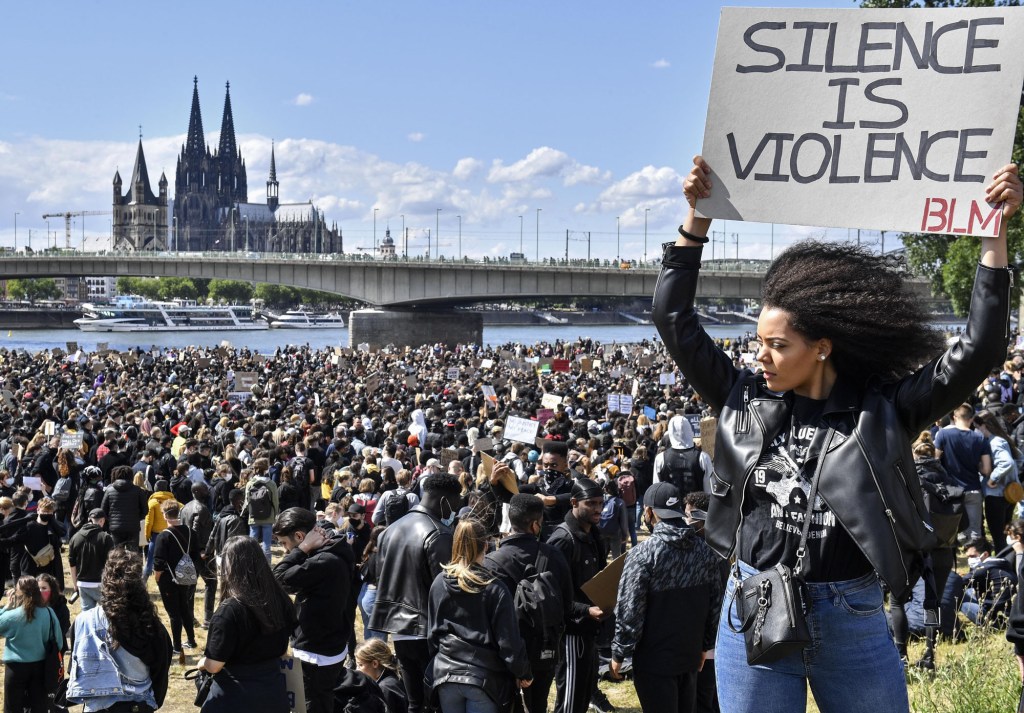
Another consideration I find most disturbing is what political scientist Lilliana Mason concluded from her research. She said, “If the people who lead us are using violent or dehumanizing rhetoric, then it’s a signal to their supporters that violent rhetoric is acceptable, and that violent action might be acceptable.” We’ve seen this play out in the media with the January 6th attack on the Capitol, the murders of lawmakers Melissa Hortman and her husband, and the recent fatal shooting of Renee Nicole Good.
Distressing. Disconcerting Disheartening. Like many people I talk to, I don’t want to stand by and do nothing. I don’t want to feel the situation is hopeless. And most of all, I don’t want to accept that this is the way things are. So, the question is, what can I do? How can I make a difference? How can I bring peace into my life and my community that may help make the world a safer place? After reading articles, books, and listening to people speak on this matter, I realize the answer is complex.
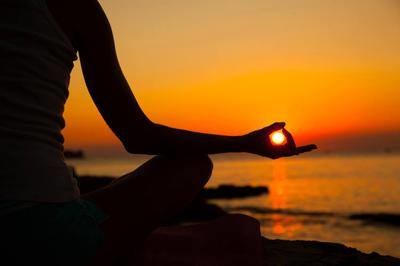
But, I’ve lived long enough to know dealing with any difficult situation means the first place I need to start with is me. If I want to see peace in my life, I need to feel it, demonstrate it, and offer it to others. I can begin by working on my own inner peace through creative visualization, meditation, and prayer. In my daily interactions, I can build understanding by responding to people thoughtfully instead of reactively, listening actively without judgment, treating everyone as equals, and speaking with patience. However, my experience tells me that these practices are a lot easier said, than done. But I also know any progress helps.
In my community, I can stand up for peace by participating in non-violent protests, which I have done and will continue to do. While I’ve stepped back from volunteering for awhile, I am now considering new organizations to get involved with. I know that working with others for a common goal builds trust, compassion, and always puts me in touch with others who I wouldn’t have otherwise known. This fosters a sense of belonging and that we’re all in this together. I can support businesses who champion peace efforts, as well as vote for candidates in local, state, and national elections who unite us rather than divide us. I can also reach out to institutions like the United Nations that encourage people to join in their Peace Begins With Me movement.
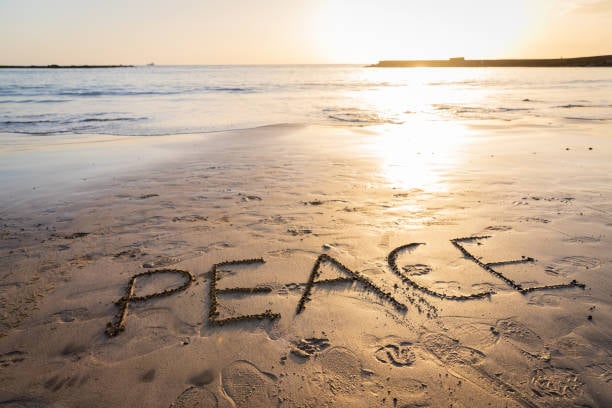
As we celebrate MLK Jr. Day, I’d like to leave you with a few quotes that are as relevant today, as when King said them. Reminding us that peace will not happen just by our wishing it to be so, but that it is attainable, if we are willing to do something. This something can be to cultivate inner peace, show others peace by example, and extend peace to everyone. Peace requires more than just a vision, it requires action. Practice peace.
“True peace is not merely the absence of tension; it is the presence of justice”.
“It is no longer a choice, my friends, between violence and nonviolence. It is either nonviolence or nonexistence.”
“World peace through nonviolent means is neither absurd nor unattainable. All other methods have failed. Thus we must begin anew… Those of us who believe in this method can be voices of reason, sanity, and understanding amid the voices of violence, hatred and emotion. We can very well set a mood of peace out of which a system of peace can be built.”
“Nonviolence is the answer to the crucial political and moral questions of our time; the need for mankind to overcome oppression and violence without resorting to oppression and violence. Mankind must evolve for all human conflict a method which rejects revenge, aggression, and retaliation. The foundation of such a method is love.
 A Journal Journey