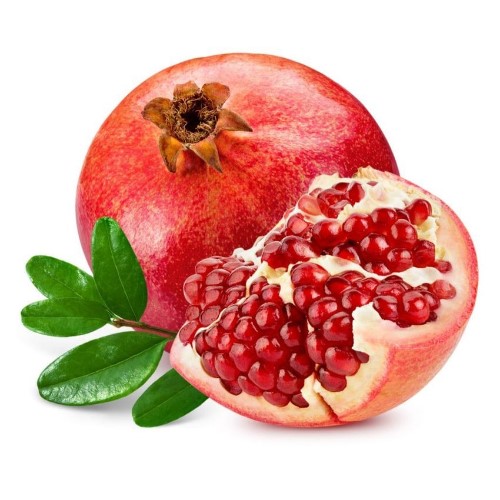
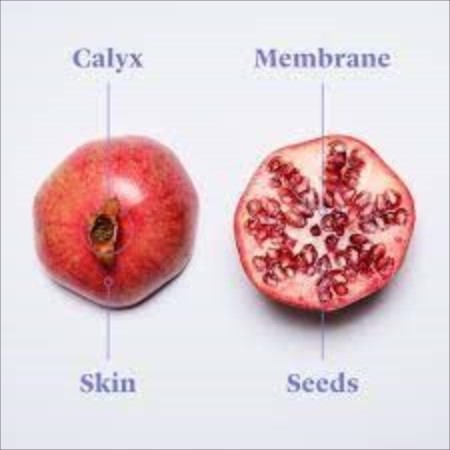
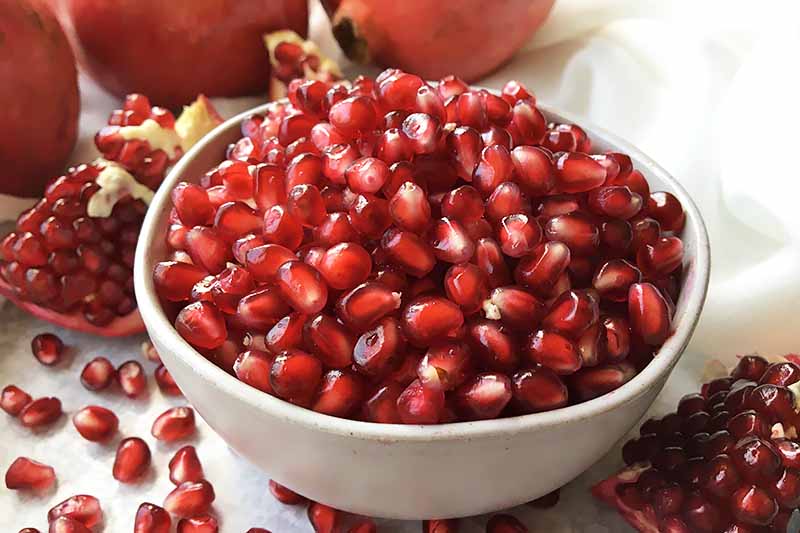
Jane Grigson, the English cookbook author and food columnist of the late 20th century characterized it as “no more than a closet of juicy seeds”. Poets around the world have referred to its seeds as ruby-red gems, and award-winning baker Kate Lebo wrote, “Cracking one open feels like lifting the lid on a jewelry box.” Such apt descriptions of this fruit and its contents. About the size of a large orange, with a smooth leather-like skin that can range in color from brownish yellow to a reddish purple, inside it is spongy and holds several chambers that are embedded with thin reddish arils encased in elongated seeds. And the amount of seeds? Each can contain 600 to 1,400 of these little nuggets!
While it’s believed to have originated in Iran and is native to Northern India and Afghanistan, it made its way to the U.S. in the late 16th century when the Spanish settled in California. And just recently, it made its way into our kitchen.
From my journal: September 20, 2025, Newbury Park, California
“…a handful of ripe ones on our tree…need to figure out what to do with them…”
The Punica granatum, otherwise known as the pomegranate, is considered a superfood and can be a delicious and nutritious addition to any diet. On many occasions I’ve enjoyed the tart tangy taste of pomegranate juice purchased from our local market. I’ve also had the pleasure of biting into the sweetly sour seeds sprinkled on top of salads I’ve ordered in restaurants. Yum! Although we planted a pomegranate tree in our backyard a decade ago, it has only produced about a dozen pieces of fruit in the last few years, most of which we gave away. However, this season we got lucky and we now have a small crop, so I’ve gotten to know more about them.
Rich in antioxidants, fiber, and containing a variety of vitamins and minerals, pomegranates are nutritional powerhouses. The seeds are known for their anti-inflammatory properties and may help keep heart disease, cancer, and type 2 diabetes at bay. Compounds in pomegranates are thought to reduce blood pressure, lessen plaque buildup in arteries, and reduce the formation of kidney stones. Because of its antimicrobial make up, it might stave off harmful microorganisms like those that lead to bad breath and tooth decay. The polyphenols in them may increase exercise endurance, improved performance, and recovery after workouts. Another plus is that pomegranates contain ellagitannins that may protect the brain against illnesses such as Parkinson’s and Alzheimer’s diseases.

Just this past week we picked five from our tree. Once washed, I had two questions. What could I do with the seeds? And what is the proper technique for extracting them? Luckily, my handy dandy Joy of Cooking cookbook could answer both questions.
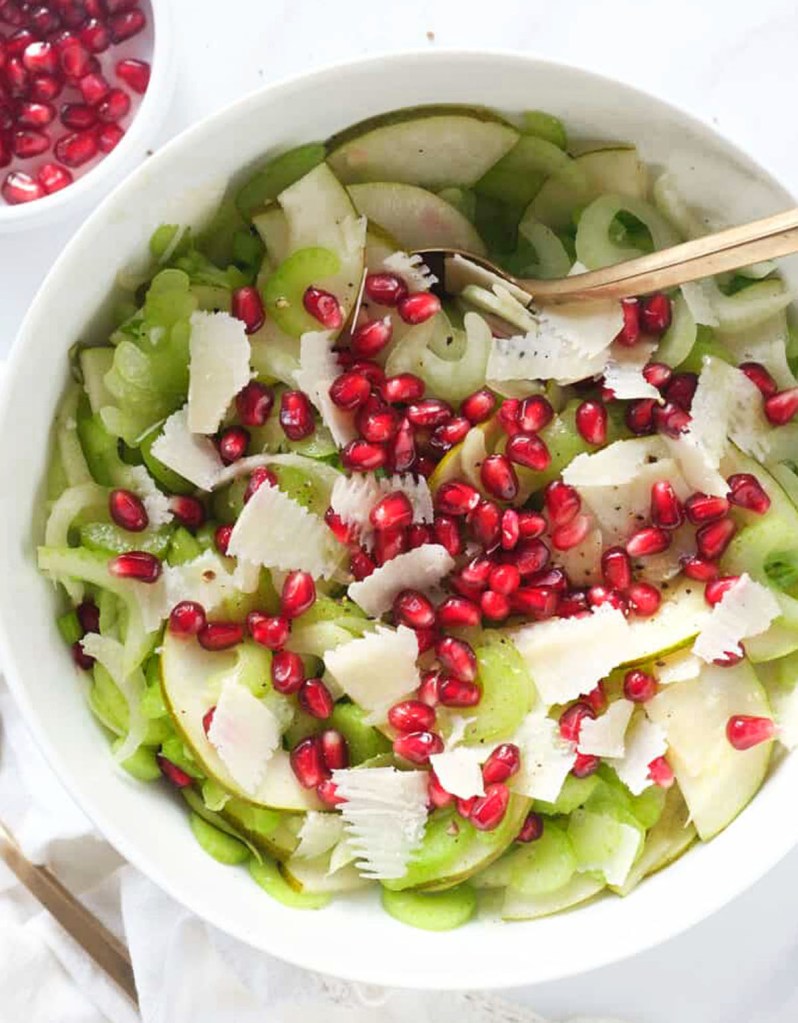
With the seeds, I could make a dark tangy syrup referred to as Pomegranate Molasses to be used as a meat glaze, in salad dressings, or in stews. I could also mix them into green, couscous, or quinoa salads. Or, if I had enough I could blend them into juice. Now that I knew the what, I just needed to know the how.
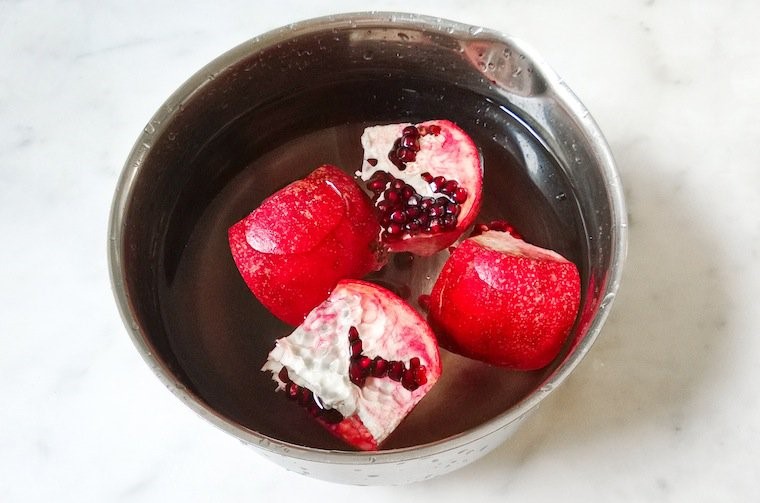
The instructions were straightforward. The first step was to cut the pomegranate in half lengthwise. Next, I quartered those pieces. This is when I found out that the juice from the seeds can spray, quite far as it happens! Then, I got out a bowl and filled it with cool water and submerged the sections into it. Next, was the time-consuming part. I gently pried each seed from the thin white membrane. After they fell to the bottom of the bowl, I easily skimmed off any of the pith on the water’s surface with a slotted spoon. Then I poured the contents of the bowl into a strainer. After one more sorting, I patted them dry and packed them into an airtight container. Whew! By the time that I finished with one pomegranate, my fingers were stained a faint red and were starting to prune. And I still had four more to go! But soon I found a rhythm and the repetitiveness became relaxing.
Later on, sharing details of this long and messy process with my sister who is an amazing and experienced cook, her comment was, “Isn’t there something you can use to take the seeds out besides your fingers?” Ha! A good question. Why didn’t I think of that? A quick Google search turned up among other things, an Anti-Slip Pomegranate Seed Remover with Stainless Steel Bowl and Hammer and even a 60-Second Pomegranate Deseeder! Perhaps using a tool would’ve made the clean up easier and would’ve saved some time and effort, but thinking about it now, what would the fun in that be?
I am marveling at the thousands of crimson jewels that I now have and I am contemplating the delightful bursts of flavor and color they will add to my dishes this week. Yay! So, here’s to the arils of the Punica granatum! Cheers! Cheers to each and every seed!
 A Journal Journey
Last nights salmon with pomegranate salsa! So good!
LikeLike
That sounds delish! I’ll have to look up a pomegranate salsa recipe now!! Thank you!
LikeLike