
Last month I was scouting around for titles to suggest for our next book club meeting. In addition to my usual sources, I checked Maria Shriver’s online publication The Sunday Paper for recommendations. I knew I’d find something inspiring in its “Get Lit” section. There I came across Pema Chodron’s When Things Fall Apart: Heart Advice for Difficult Times. Though I had heard of Chodron, an American Buddhist nun and was familiar with some of her teachings, I had not read any of her books. Given my recent views on the state of our country and world, I was ready to welcome any guidance on to how to navigate my daily life, especially as I’ve been feeling constantly bombarded with negativity.
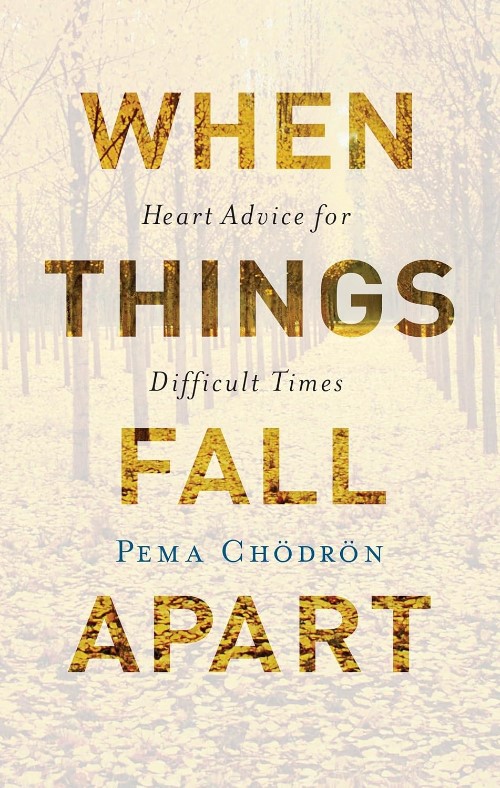
I was surprised to learn that this book had first been published in 1997. More than a quarter century ago! What was happening in the world then? What difficult times would advice be needed for? Were the issues then so different than they are today? Among the top world events that took place then were: Hong Kong returned to Chinese rule, JK Rowling published her first Harry Potter book, and Princess Diana died in a car accident. Here in the states, Bill Clinton began his 2nd term as President, Timothy McVeigh was convicted of the Oklahoma City bombing, and The Million Woman March took place in Philadelphia. Throughout history, in any given era, year, or even day, both positive and negative events occur. Positive in the sense that the occurrence moves us forward as a society, nation, and world. It could be a breakthrough in a cure for a disease, advancement of human rights, or new technology that can contribute to a better quality of life. And negative in the sense that certain events challenge us, such as wars, large-scale heath epidemics, and natural disasters.
From my journal: April 15, 2020, Newbury Park, California
“Watched Gov. Newsom’s COVID update…outlined things that need to be in place in order to ‘open’ the state…everyone’s trying to adjust to this new way of living, we’re all faced with uncertainty…it’s clear we’ll have a new normal…”
Knowing that we are always going to have to deal with difficult situations, what can we do when they arise? How do we work through them? What can one person do to help? I found so much wisdom in the pages of Chodron’s book. Too many ideas for discussion in one blog post. So the one takeaway I’ll share this time is the practice of Tonglen.
An essential component of Tibetan Buddhist meditation, Tonglen is a simple breathing technique. Originating over 1,000 years ago from teachings of the Indian Buddhist master Atisha, ‘Tong’ means giving and ‘len’ means receiving. In this practice, a person breathes in the suffering of others and breathes out peace and healing. Its purpose is to develop compassion and a caring connection with others.
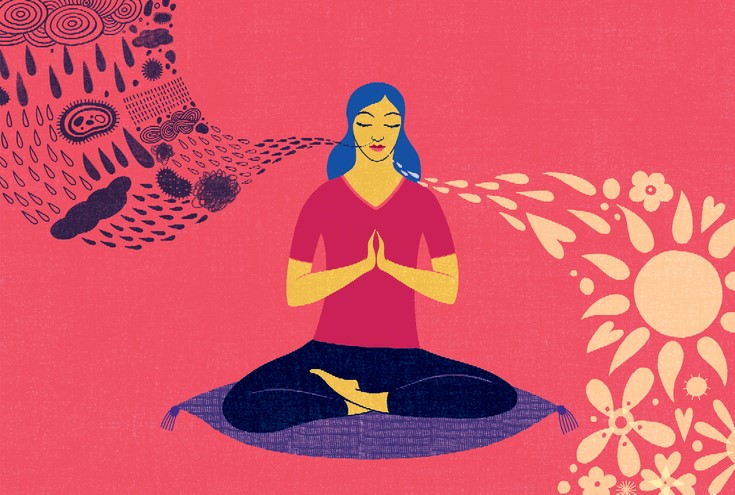
With each inhale, a person visualizes those who are hurting and in need of comfort. With each exhale, a person sends out healing and positive energy to them. A firm believer in the power of deep breathing and visualization to heal, I like this idea a lot. We often send people we care about uplifting texts when needed, why not extend this a bit further? I also like that Tonglen can be used to help ourselves through painful times, as well, fostering an inward compassion.
Still recovering from the latest Southern California fires, the loss and devastation is immense. Every time I read an article or watch the news my heart breaks again. It’ll take time, resources, and people working together to rebuild homes, lives, and communities. Painfully aware of this, still I keep asking what can I do, me, just one person, to help. How timely to discover Chodron’s book, offering a way to do just that.
 A Journal Journey