It was spring and our unit on Lepidoptera was about to begin. It was my first year teaching and I needed to brush up on my silk moth and monarch butterfly knowledge. I was not only responsible for educating my first graders on their life cycles with books, movies, and diagrams, but with hands-on activities, too. And not only art-related projects, oh no, we were actually going to see magnificent metamorphoses take place, right before our eyes!
Science kits were ordered and when the first “live” specimens arrived, I quickly understood how exciting this unit was going to be. Although we shared our classroom with a living and breathing guinea pig named Fluffy, this was going to be a different kind of experience. Each student would be caring for their own precious insects until they matured and would be released into the wild blue yonder.

Up first were lessons on moths, then came the butterflies. If you’re not familiar with these life cycles, both begin in the Egg Stage. Round or oval, eggs vary in color and texture depending on the type of moth or butterfly they become. When eggs hatch, silkworms or caterpillars appear. This is the Larva Stage. Then it’s time for them to eat and grow all the while shedding their skin – four to five times! Once fully grown, they form a cocoon or chrysalis in the Pupa Stage. This is where the real transformation takes place. All body parts are reformed and in a couple of weeks, a lovely moth or butterfly emerges! That’s when they enter the Adult Stage.
Like timing, planning for the unexpected is everything. It meant having more than enough eggs in case some weren’t viable. It meant having a healthy food supply and proper containers to house the growing and changing insects. It meant closely monitoring students’ interactions with their little beings throughout each stage to ensure their survival. And it meant teaching lessons not only about metamorphosis but about empathy, caring for and being gentle with new life. Also, I needed to prepare them to let their moth and butterfly go when the time came to do so.
For months, the kids and I were enthralled with this real-life Science, little miracles happening in our classroom every day. To see white yellowish silkworms with tiny black hairs covering their bodies was truly something. And watching them eat – what appetites they had! Amazing, too was witnessing them spin a protective cocoon around themselves. About the size of a small cotton ball, it was made from one single thread of silk! If all of that was not astonishing enough, then it would have to have been viewing the silk moths struggling free from their cocoons with bunched up wings, then resting a while so their white wings could dry and expand to their full length – one to two inches. Wow! After observing them for a few days, we said our good-byes and I put the container outside before going home, so that they could fly away once evening set in.
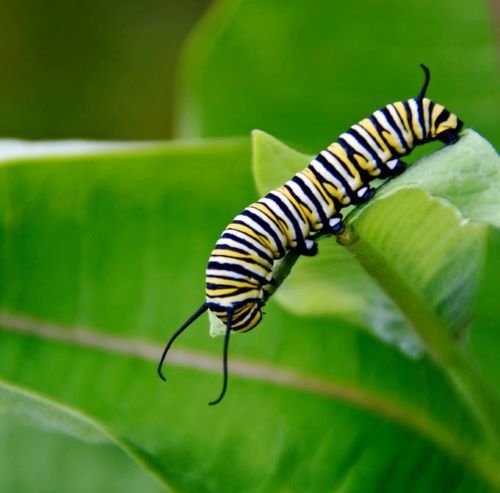
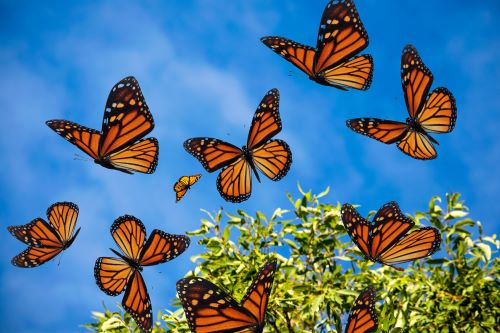
Similarly, our monarch butterfly life cycles were sights to behold. With black filaments on both ends of their two-inch bodies, these caterpillars were striped with bands of white, black, and yellow. And they were voracious eaters, as well. Once they completed forming their pale green chrysalises, I hung them vertically inside our mesh butterfly container adding a sticky note near each one to identify whose butterfly it was. Over the course of two weeks, we watched as these pale green chrysalises turned a goldish green, then blue. When the monarchs made their grand appearance, just like the moths, their wings looked wrinkled and damp until they pumped them dry. This is when we were dazzled by their stunning bright orange, three-to-four-inch wings with dark veins and white dots at their edges. Such beauties!
From my teacher’s plan book: June 7, 2002, Thousand Oaks, California
“Butterfly Release @ 2 p.m. w/ Mrs. R’s class.”
Wanting to cap off this module in a special way, one of my teaching partners and I decided on a Butterfly Release Event. So, on a beautiful short-sleeved spring afternoon our students followed us to the green hill just beyond our classrooms. She and I held our butterfly containers and instructed our students to form a circle around each of us. One by one, we said we we’d call them over, let them take their butterfly into their open hand, and kindly send it on its way with their best wishes. I imagined a graceful scene, children smiling, waving to their butterfly floating off on a soft breeze, all students feeling a sense of happiness, joy, and pride.
What happened was…bouncing up and down, my students couldn’t quite contain their enthusiasm. When I called the first child over, she did as I asked and put her butterfly into her palm. However, it was the lift off that didn’t go smoothly. Instead of letting it flitter away, she kind of tossed it, and it fell to the ground. She tried again and it made its way up and a little farther away. But there was no time to console her. Each child needed their turn. Onward we went. Some launches were successful. Some were not. And if you’re the fifteenth student called on, in a class of twenty-five, patience can run thin. Most often, leading to distraction, goofing around, or worse yet, aggression. By the time the last few kids received their butterflies, they were so wound up, they ended up squashing them in their fists. The smiles turned to frowns, the laughter turned to gasps, and the cheers turned to tears.
It’s probably safe to say, we all went home that Friday a bit disappointed and a little shaken. I know I was. Thankfully there was a weekend to put some time between “the incident” and the next school day. I also realized that one mishap wouldn’t negate all the life-affirming lessons learned in Lepidoptera. And just like any short-lived drama or trauma, in time I knew what happened would become fodder for a story, amusing or not.
Now whenever I see a caterpillar inching by me on a trail I’m reminded of the wonder of metamorphosis, and when I see a monarch butterfly flit by I can watch its delicate flight and marvel at its beauty. And when I hear the Elton John’s song “Someone Saved My Life Tonight” with the lyrics:
…You’re a butterfly
And butterflies are free to fly
Fly away
High away…
I add always add the word…“Please!”

 A Journal Journey