From my journal: July 21, 2021, Newbury Park, California
“Just came across a photo from the spring of 2005! Hannah in her Easter outfit! So cute!”
This photo of our four-year old niece brought me back in time. Straw baskets filled with chocolate foil wrapped bunnies, soft shelled chewy jelly beans, and ooey gooey marshmallow peeps. Dyed and decorated hard boiled eggs in a bowl, hidden treasures found in grassy backyards, hollow shells hung with ribbons on twigs fashioned together as a tree. New short-sleeved flowery dresses, an early Sunday morning mass, and a midday meal of ham, carrots, and mashed potatoes. Ah, Easter.

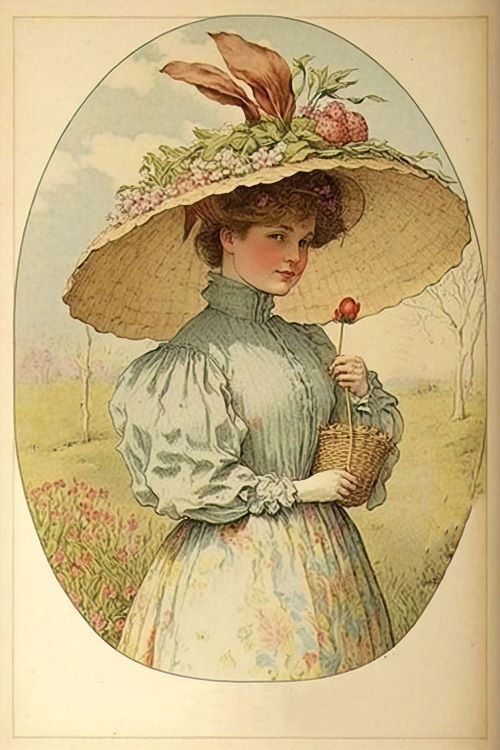
Of all the traditions, the one I liked most as a kid was getting to buy new clothes. And no outfit would be complete without a hat! Usually a crisp white wide brimmed topper. Perhaps with a soft-hued ribbon tied around it or a faux flower attached to the front or side. We referred to them as hats, but maybe we should’ve called them by their proper name, Easter bonnets.
Bonnets per se first made their appearance in the Middle Ages. Derived from the term “beguine”, the name referred to various philanthropic Christian communities of laywomen who wore them. Originally made of wool or linen, these hood-shaped hats were a symbol of modesty and were worn to protect heads from cold weather. Over time, bonnets became more popular and were no longer associated with religion but were transformed into a fashion accessory.
These hats, tied under chins with brims framing faces, changed dramatically over the centuries. Silk and velvet became favored materials, and vibrant hues and patterns replaced muted colors. Embellishments such as lace and embroidery added flair and a feminine touch, as well.

Long a tradition in Europe, the wearing of bonnets at Easter in the U.S. began in the late 1800s. Some speculate that they made their debut on the “Sunday of Joy”, the first Easter after the end of the American Civil War on April 16, 1865. It’s purported that on this day, after years of mourning fallen soldiers, women opted to wear bright and joyful ensembles instead of their usual dark and somber attire. However, others believe they arrived on the scene five years later in New York City during the first-ever Easter Parade. That’s when socialites dressed to the nines in their new clothes and women donning Easter Bonnets paraded down Fifth Avenue after church services. Since then, it’s been an annual event, with it’s popularity peaking in the 1940s. Perhaps that was in part due to the release of Irving Berlin’s Easter Parade film in 1948, starring Judy Garland and Fred Astaire.
Now billed as The Easter Parade and Bonnet Festival, it is still going strong. Today, however, absolutely anyone, not just wealthy city-dwellers can join in the fun! Women and men, people of all ages, couples, friends, families, even fur babies can take part in the merrymaking. Some may take months to prepare their bonnets, while others may decorate a favorite hat with springtime adornments on Easter morning. No matter, participants and spectators alike are all welcome to enjoy the revelry.
So if you happen to find yourself in New York City this Easter, March 31st, head on over to St. Patrick’s Cathedral on Fifth Avenue any time after 10 a.m. There you’ll find people gathering, milling around, and strolling from 49th Street to 57th Street to meet and greet others who have come to show off their creative millinery. And if you decide to participate and wear your finest chapeau, perhaps as the Irving Berlin’s song goes,
In your Easter Bonnet,
with all the frills upon it,
You’ll be the grandest lady (or gentleman!) in the Easter Parade!

Happy Easter to All!
 A Journal Journey
Thanks for your reminder of why I loved Easter so much as a kid! You’re the best, Sharon, and I hope you find all your favorite Easter eggs & candy. You too Robert!
LikeLike
Thanks, Holly! Happy Easter to you and your family!
LikeLike