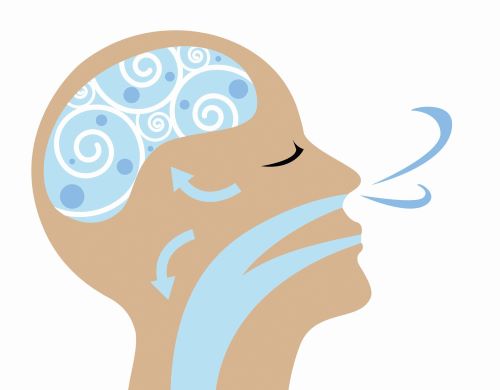
It is an involuntary function in our bodies, yet can become more powerful when exercised regularly. It can occur only in the present moment, yet can be accessed anytime or anywhere. It is also lighter than a feather, yet can not be held in our hands. And, it happens to be what I am focusing on during February as part of my year-long Quest for Calm. It is…my breath. Three times a week, four times a day, I’ll be practicing deep breathing techniques. These exercises cost nothing, except for a few minutes of my time, can be done sitting at my desk, and are easy to do.
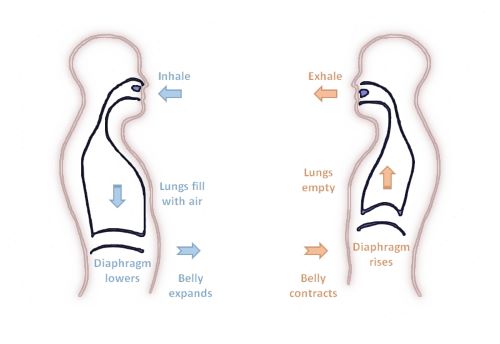
If you think back to Science class, you may recall that the main role of breathing is to exchange carbon dioxide for oxygen during its two phases. Inhaling, the taking in of air and exhaling, the letting out of air. When we inhale our diaphragm, the dome shaped muscle located between our chest and abdomen contracts and moves downward. This movement allows our lungs to expand with air. When we exhale, our diaphragm relaxes and the air in our lungs is expelled. Every system in our bodies relies on our breath to work properly, from digesting food, to physical activity. Breathing keeps our hearts beating. It keeps us alive.
Though automatic, countless times I’ve heard someone say said to me, “Just breathe.” Maybe you can relate. Afterall, it’s a common phrase meant to remind a person to calm down, pause, or take a break. It’s usually said out of care and concern, but I know many times hearing this only made me feel more anxious, nervous, or upset. That being said, it is really good, rather great, advice.
When we are worked up and are in a heightened state of stress our heart and breathing rate quickens, our muscles tense, and we may feel discomfort in our chest and stomach. These symptoms send our nervous system into overdrive as it tries to alert us that something is wrong. This is when we should be listening to what our bodies are trying to tell us, so we can stop, rest, and regain control over ourselves. However, with all the distractions in our modern-day world, we may ignore these messages, or may not hear them at all. Which isn’t good. Long-term effects of shallow breathing include high blood pressure, GI conditions, depression, Type 2 diabetes, and eczema, just to name a few.
From my journal: July 18, 2007, E. Twickenham, England
“Sent away for a kit called The Breathing Box by Gay Hendricks…a video and booklet…need help destressing from this move…”
While there are numerous types of deep breathing exercises, I’ve selected three to implement this month. Two, I’m familiar with through yoga and the other is new to me. Should you want to try them, here are the step by step instructions.
Alternate Nostril Breathing also known as Nadi Shodhana Pranayama works well to alleviate anxiety. I was introduced to this type of breathing decades ago in a Kripalu yoga class. While it may seem complicated, it becomes easier with practice.
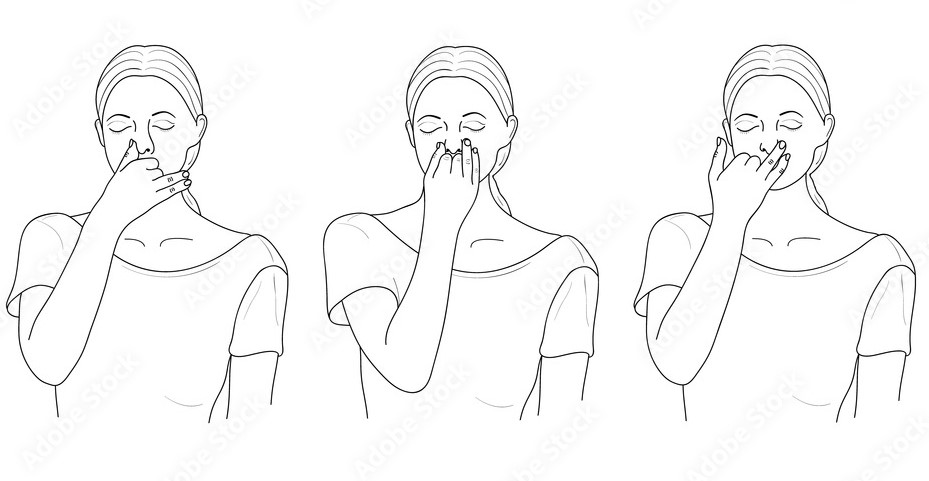
- Bring your right hand to your nose, pressing your first and middle finger to your palm, leaving your other fingers extended.
- Close your right nostril with your thumb.
- Inhale through your left nostril, then close your left nostril with your pinky and ring fingers.
- Release your thumb and exhale through your right nostril.
- Inhale through your right nostril, then close with your thumb.
- Release your fingers to open your left nostril, then exhale.
- Repeat from Step 2, for up to five minutes.
Sitali Breathing helps lower your body temperature and relax your mind. I learned this method in a Hatha yoga class, but like Alternate Nostril breathing, it’s been many years since I’ve used it. This is another technique that may feel a little awkward at first, but is simple after a few tries.

- Stick your tongue out and curl your tongue, bringing outer edges together.
- If you can’t curl your tongue, just purse your lips.
- Inhale through your mouth.
- Close your mouth, then exhale through your nose.
- Repeat from Step 1 (or 2), for up to five minutes.
Box Breathing also known as 4-4-4 breathing is good for clearing the mind, so I can’t wait to give it a try.
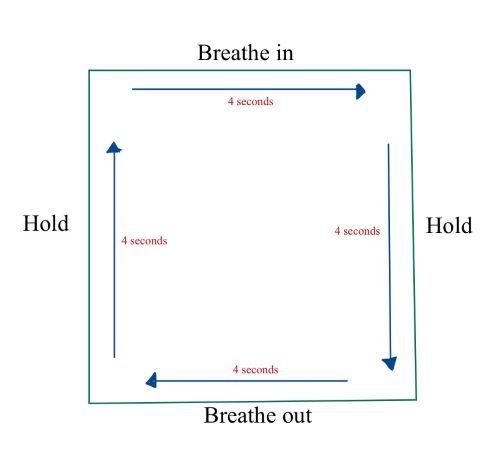
- Breathe in through your nose, counting to 4 slowly.
- Hold your breath for 4 seconds.
- Exhale slowly through your mouth for 4 seconds.
- Hold your breath for 4 seconds.
- Repeat from Step 1, until you feel re-centered.
Will practicing these techniques really help me feel calmer, more relaxed, and clearer of mind? When stressed, will they be useful in bringing me back to a more balanced state? When overwhelmed, will I be able to apply them to find some peace? There’s only one way to find out and I’m happy to say, my Quest for Calm is underway!
“Breathing is not only the process of inhaling and exhaling, it is a reminder that every breath is a gift of life.” – Unknown
 A Journal Journey