
While fall is officially getting underway and families and friends are gathering for apple picking, leaf peeping, and tailgate parties, there’s another group coming together for an entirely different reason. They are the teachers, librarians, authors, publishers, booksellers, writers, journalists, and readers of all kinds in communities all across the U.S. Why? For Banned Book Week. Usually held in late September, this year’s celebratory week begins in early October. Its purpose is to shine a light on the detrimental effects of censorship and the positive benefits of unrestricted reading.
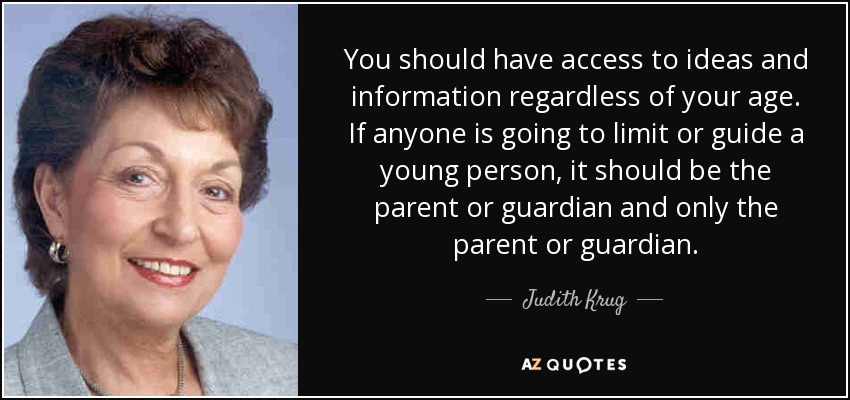
It’s believed the first book ban took place in eastern Massachusetts in 1637. And while censorship has been around for centuries, when a sudden increase in the number of books called into question occurred in the early 1980s, people began to take notice. Among those concerned was Judith F. Krug, a librarian and freedom of speech proponent who was working as the director of the Office for Intellectual Freedom within the American Library Association. The ALA’s mission is “to promote the freedom to choose or express one’s opinions even if that opinion might be considered unorthodox or unpopular, and stresses the importance of ensuring the availability of those viewpoints to all who wish to read them.” With this in mind, Krug co-founded Banned Book Week in 1982.
While the First Amendment of the U.S. Constitution protects our right to freedom of speech and the press, every year complaints, known as challenges are made by individuals and groups to ban books. In order for a challenge to go forward, the applicant must have read the entire book, must have filled out a challenger form, and have explained why, how, and where in the book the offensive description, language, or action takes place. The case is then presented to a school or library board for a hearing, resulting in one of three outcomes. The title is retained, it is relocated to another section of the library, or it’s removed aka banned.
According to the ALA, prior to 2020, most challenges were brought forth by a single parent to restrict or remove a book their child was reading. Understandable, however the Access to Library Services for Minors (part of the ALA policy) states “Librarians…maintain that parents – and only parents – have the right and responsibility to restrict access of their children – and only their children – to library resources.” In 2020 things changed regarding challenges. It’s then that 90% were requests to censor not one, but multiple books, and 40% wanted more than 100 titles removed all at once. These stats and the list of top book titles challenged that year, suggest there’s an increasing, well-organized, conservative political movement whose aim it is to remove books about race, history, gender identity, sexuality, and reproductive health from libraries. These groups share book lists with others via social media to make mass challenges that can leave library shelves void of books.
Which leads to the question – what reasons are cited for challenging books? Most often it is thought that the materials contain sexually explicit descriptions, offensive language and/or is unsuited to an age group. Although most attempts to ban books are unsuccessful, the number of them continues to rise.
From my journal: November 16, 2017, Newbury Park, California
“Parents are trying to ban books in our high schools…sounds like last week’s school board meeting was crazy and turned nasty – 6 hours long! I’ve read most of the 10 books they want removed…”
Six years ago, our local school district adopted a red-flagging policy that requires all high school English teachers to warn parents when books contain “mature content” by asterisking the titles on their syllabi. This caused a flurry of divisive letters to be sent to the editor of our local newspaper. One editorial raised the concern that by making teachers uphold this policy, essentially award-winning books are going to end up cast in two categories, either “good” or “bad”. And if this is the case, some teachers will be reluctant to assign the “bad” ones. The point being, that while not straight-out book banning, it is a form of censorship.

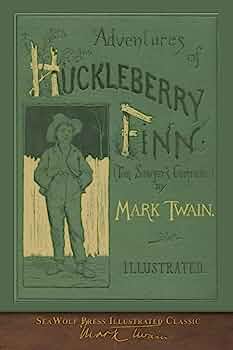
Besides the books I mentioned in my last post, I’ve learned that yes, the Bobbsey Twins series that my 6th grade teacher read to our class was indeed banned at one point. The Adventures of Huckleberry Finn by Mark Twain and The Catcher in the Rye by J.D. Salinger, assigned reading books that I adored, were banned as well. Although these books reflect a different time and place, they are important coming of age novels that explore friendship, integrity, and loyalty. Messages that are still relevant and valuable today.
Removing books from schools and public libraries keeps students from exploring ideas and beliefs that differ from their own, and ones that they don’t agree with. Some feel this type of censorship is harmful and creates a xenophobic society. Allowing kids to read and learn about people, places, and perspectives unlike theirs, helps to foster empathy. For kids who feel socially excluded due to gender identity, race, ethnicity, and disability issues, seeing and hearing themselves represented aids in building positive self-esteem. It’s also believed that children who read diverse books will be more accepting of others who are not like them, will be more knowledgeable about the world we live in, and will be healthier both socially and emotionally.
“Let Freedom Read!” is this year’s theme for Banned Book Week taking place October 1st – 7th. If you’d like to join in activities to support the right to read, and the idea of all scenes being seen, and all voices being heard, contact your local libraries, schools, and bookstores.
Perhaps, the reasons books are challenged and banned, are the reasons they should be, and need to be read.
 A Journal Journey